
Plant and machinery rental and sales options are tailored to meet the needs of builders and contractors, offering reliable performance for any job site. Our team delivers flexible terms, competitive pricing, and proactive maintenance to keep projects on track. From compact lifts to heavy excavators, we provide guidance every step of the way. For more details and current offerings, visit https://www.sjhallplant.com.
Operators and site managers carry a heavy responsibility when it comes to safety on construction sites. The responsible use of plant equipment, whether new or used, is fundamental to protecting workers, improving productivity, and maintaining compliance with health and safety legislation. The following approaches blend industry best practice with practical, real-world methods to reduce risk and promote a culture of safety around used plant and machinery, second hand plant machinery, and plant equipment for sale.
Leadership and pre-operational standards
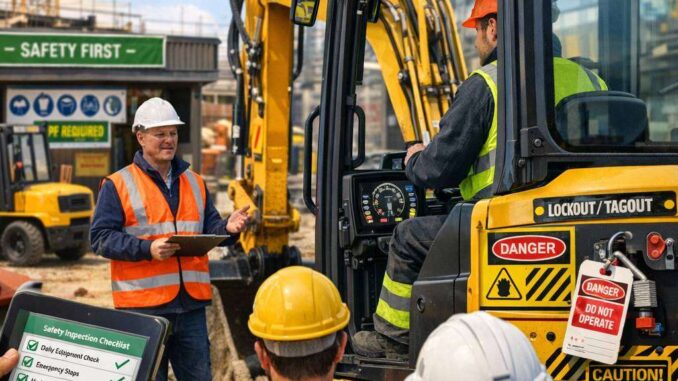
Effective safety starts at the top. Site leaders should establish clear safety objectives and ensure they are communicated to every operative. Risk assessments must be completed before any machine is brought onto site, and these assessments should be revisited whenever conditions change or when introducing new equipment from a supplier of used plant for sale. Supervisors should verify that instructors and operatives are competent to operate the specific plant equipment for sale, including familiarisation with any bespoke features of second hand plant machinery. A rigorous permit-to-work system should be in place for high-risk activities, with explicit authorisation and a robust requirement for lockout-tagout procedures where applicable.
Competence, training and refreshers
Skilled operator training is a non-negotiable element of safe plant operations. Training should be matched to the exact model and type of plant machinery in use, not merely to generic categories. Refresher sessions are essential, especially when introducing used plant and machinery into a fleet or when a machine has been serviced or repaired. Training should cover controls, stability, tipping hazards, load limits, quiet periods for audible alerts, and the correct response to fault indications. A culture that values ongoing learning helps ensure operators remain up to date with evolving safety practices and manufacturer recommendations for plant equipment for sale.
Maintenance, inspection, and reliability
Regular maintenance and thorough inspections are the backbone of safe operation. A documented maintenance calendar for every unit of plant equipment for sale should be maintained, detailing service intervals, parts replacement, and safety-critical checks. Pre-use checks, including hydraulic integrity, brake performance, seating, seatbelts, and control responsiveness, should be standard procedure. For used plant and machinery, particular attention should be paid to potential hidden wear, corrosion, or fatigue that may not be immediately evident. A clear policy on reporting and acting upon any defect, no matter how minor, helps prevent incidents. Equipment downtime must be balanced with the need for safety, ensuring that repairs are completed by qualified technicians and, where relevant, by specialists who understand second hand plant machinery specifics.
Plant & machinery is essential for any construction project, delivering reliability, capability, and safety. Our team sources and rents the latest equipment to keep sites on schedule and within budget. For more information, visit https://www.bechtel.com/projects/bechtel-plant-machinery-inc/. We tailor solutions to fit your needs and maximize productivity.
Discover reliable plant & machinery solutions for construction projects, backed by expert support and flexible rental options. For more details, visit www.sjhallplant.com/ and explore our competitive rates today.
Ancillary safety devices and features
Plant equipment for sale often comes with built-in safety features, but these should be verified and complemented with site-specific safeguards. Functional alarms, speed governors, load moment indicators, stability controls, and anti-tip devices should be tested regularly. Bleeding-edge safety technology, such as telematics for monitoring operator behaviour and machine utilisation, can provide data to inform training and risk reduction strategies. Environmental safety considerations, such as exhaust emissions and engine shut-off systems in the event of a fault, are also important to maintain safe site conditions. For sites using used plant and machinery, a thorough check of safety devices is essential to ensure that refurbished units retain their protective features and comply with current standards.
Safe operating procedures and behavioural safety
Written safe operating procedures (SOPs) provide a reference point for every job task. SOPs should be specific to the make and model of plant machinery for sale, including start-up, shut-down, and fuel management procedures. Behavioural safety supports these procedures by reinforcing careful and deliberate operation. Operators should be encouraged to perform a five-minute risk assessment before starting any task, considering ground conditions, weather, proximity to other workers, overhead hazards, and the presence of pedestrians. Clear visibility and communication between operators and banksmen are essential, particularly for manoeuvring heavy plant. The use of spotters or banksmen remains a proven method for coordinating complex lifts or restricted site movements, especially when dealing with congested areas or long-reach equipment.
Site layout, traffic management and segregation
A well-planned site layout reduces the potential for collisions and operator error. Separate zones for loading, lifting, and travelling can minimise contact with pedestrians and oncoming traffic. Traffic management plans should reflect the capabilities and limitations of the plant equipment for sale, including maximum operating radii and sighting distances. When working with used plant and machinery, it is prudent to reassess the site layout to account for differences in performance, braking distances, or turning capabilities compared with new models. Visual aids, high-visibility signage, and designated pedestrian walkways support safe movement throughout the site.
Lifting operations and risk controls
Lifting operations demand additional controls given the potential for serious incidents. For any crane, telehandler, or lifting accessory, a thorough lifting plan must be created. This plan should outline load weights, rigging arrangements, and anchor points, incorporating the specific capacities and limitations of the plant equipment for sale. A competent person should supervise all lifts, with the operator strictly adhering to load ratings, outreach distances, and wind conditions. Regular inspection of lifting gear, including chains, slings, hooks, and spreaders, is imperative to prevent failures that could endanger personnel and equipment.
Incident reporting and continuous improvement
An effective safety culture requires transparent incident reporting and proactive learning. All near-misses and incidents should be logged, investigated promptly, and communicated to the workforce with remedial actions clearly articulated. Trends identified through proactive data analysis can inform training needs, maintenance scheduling, and selection criteria when purchasing used plant and machinery. Sharing learnings from real-world experiences with colleagues and partners helps raise industry-wide safety standards and demonstrates a commitment to continual improvement in plant equipment for sale.
Procurement considerations for safety-conscious fleets
When considering used plant for sale, buyers should perform due diligence to verify service histories, accident records, and compliance with current safety standards. Reputable suppliers will provide comprehensive documentation, including service logs, warranty information, and parts provenance for second hand plant machinery. It is prudent to compare machines not only on purchase price but also on safety features, maintenance support, and operator training packages offered by the seller. A well-considered procurement approach prioritises reliability, maintainability, and safety over cost alone, ensuring that plant equipment for sale meets site-specific requirements without compromising workers’ welfare.
By integrating strong leadership, robust training, rigorous maintenance, and thoughtful site planning, construction teams can elevate safety when operating plant and machinery on site. Emphasising the safety of used plant and machinery, alongside a rigorous approach to procurement and ongoing staff development, creates a safer, more productive working environment for everyone involved.